Meta Ads for Ayurveda Centres in Kerala: Get Enquiries Without Getting Rejected
Ayurveda ads get rejected for words most clinics use every day. Here is how to write compliant copy, which offers work, and how to plan campaigns around Karkidakam, the monsoon treatment season.
Ayurveda is one of the hardest categories to advertise on Facebook and Instagram. Ads get rejected for words most clinics use every day, accounts get restricted, and many centres give up and go back to relying on word of mouth and travel agents.
It doesn't have to be that way. Ayurveda centres and wellness retreats can run Meta Ads reliably if they understand what Meta is actually checking for, and plan their campaigns around Kerala's treatment seasons. This guide covers both.
Why Ayurveda ads get rejected
Meta reviews health ads against two sets of rules that matter most here:
- Health claims. You can't claim a treatment cures, prevents or guarantees results for medical conditions. "Cures arthritis" or "reverses diabetes" will be rejected, and repeated rejections can restrict your ad account.
- Personal attributes. You can't imply you know something about the person seeing the ad, such as their health condition or weight. "Suffering from back pain?" or "Are you struggling with stress?" speak directly to a condition the viewer may have, and that's the most common reason Ayurveda ads get flagged.
Meta also reviews your landing page. A perfectly worded ad can still be rejected, or approved and pulled later, if the page it links to is full of cure claims and before-and-after photos.
Meta's health policies have been changing through 2026, so always check the current version of its advertising standards before a big campaign. The principles below have held steady through those changes.
How to rewrite Ayurveda ad copy so it gets approved
The trick is to describe the experience and the facts instead of the outcome and the patient. You're selling a programme, a place and a team of doctors, not a cure.
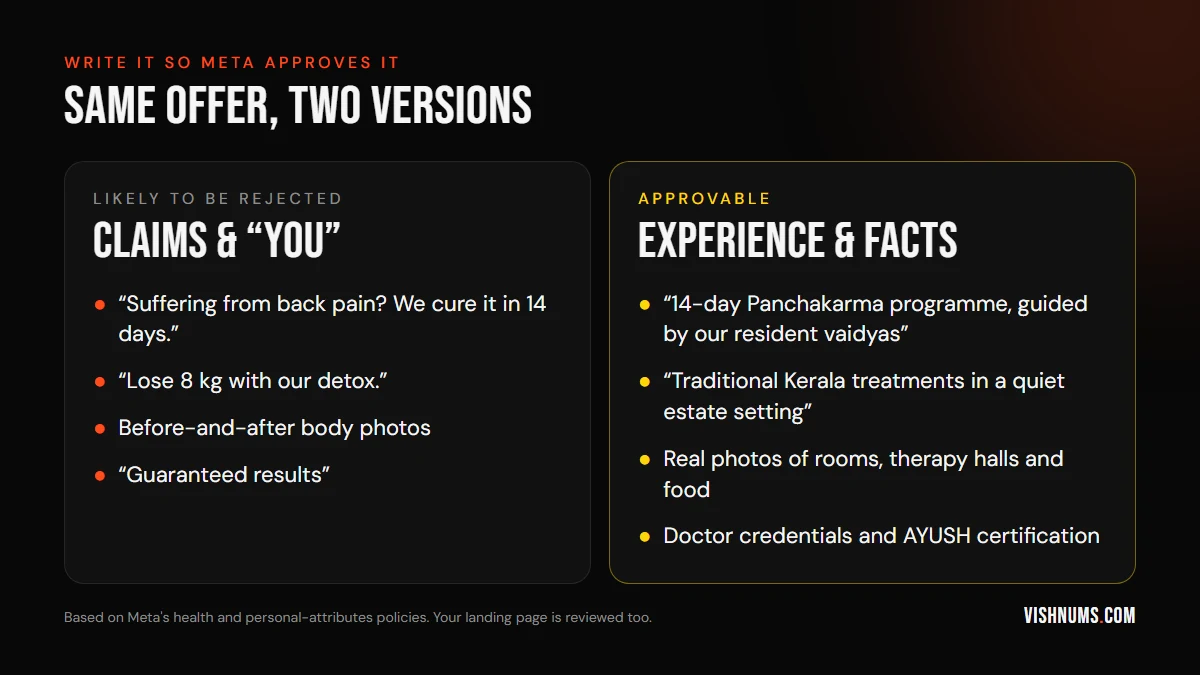
A few rules that keep you safe:
- Talk about yourself, not the viewer. "Our 21-day Panchakarma programme" instead of "Your joint pain".
- Name the treatment, not the disease. Abhyangam, Shirodhara, Pizhichil and Panchakarma are descriptions of what you do. They're specific and searchable, and they don't make a medical claim.
- Show credentials. Doctors' names and qualifications, years the centre has operated, AYUSH or NABH accreditation, and Green Leaf classification from Kerala Tourism if you have it. Trust signals sell better than promises anyway.
- Use real photos. Therapy rooms, the herb garden, food, the view from a room. Skip stock images of glowing models and skip before-and-after photos entirely.
- Keep the landing page consistent. Remove cure language and dramatic testimonials from the page you send ad traffic to.
Who you're advertising to
Most Ayurveda centres in Kerala have three distinct audiences, and they need different campaigns:
Kerala and South Indian families
Often looking for a specific treatment for an older relative, or a seasonal Karkidakam programme. Malayalam creative and click-to-WhatsApp ads tend to suit this group because they want to ask questions before committing. Read my comparison of click-to-WhatsApp vs lead form ads before you choose.
NRIs, mainly in the Gulf
They plan treatments around annual leave and often book for parents back home. Target Malayalam speakers living in the UAE, Saudi Arabia, Qatar, Kuwait, Oman and Bahrain, and run these campaigns two to three months before the dates they're likely to travel.
Wellness tourists from India and abroad
They book longer, more expensive programmes and compare centres carefully. They want to see the doctors, the daily schedule, the food and the accommodation. Video works well here, and so do long-form landing pages.
Plan around Karkidakam
Karkidakam, the Malayalam month that falls in the middle of the monsoon, is traditionally the season for Karkidaka chikitsa, the rejuvenation treatments many Keralites take every year. In 2026 it ran from 17 July to 16 August.
The mistake most centres make is starting their ads in July. By then, the families who planned ahead have already booked. A better rhythm:
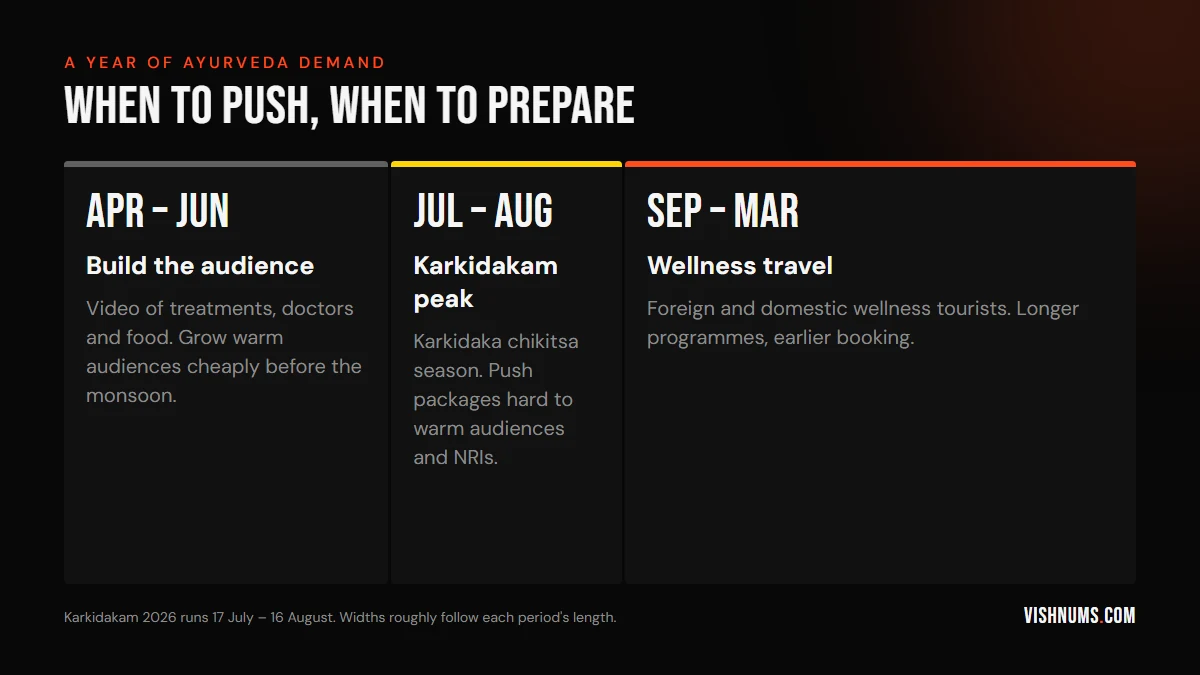
- 01April to June: build the audience. Run cheap video views and engagement campaigns showing your treatments, doctors and kitchen. You're building a pool of people who know you.
- 02Late June to August: push the packages. Retarget everyone who watched your videos or visited your site with specific Karkidakam programmes, prices or "starting from" rates, and the dates.
- 03September to March: wellness travel. Shift to longer programmes for domestic and international wellness travellers, who book further ahead.
Which campaign objective to use
- Messages (WhatsApp) for local and NRI family enquiries. People want to ask about the doctor, the room and the price first.
- Leads (instant forms) if you have a team that will call back within an hour. If leads wait until the next day, most go cold. My guide to following up enquiries applies to Ayurveda centres too.
- Sales or website conversions only if your site takes bookings and you can track them reliably.
Measure what matters
Count enquiries, but judge campaigns on confirmed bookings and their value. Keep a simple record for every enquiry: where it came from, whether it booked, and for how much. After two months you'll know your real cost per booking by audience, and you can move money from the audience that chats to the one that books.
Frequently asked questions
Can Ayurveda centres advertise on Facebook and Instagram?
Yes. Meta allows ads for Ayurveda treatments and wellness retreats as long as the ads don't make medical claims, don't imply knowledge of the viewer's health, and link to a landing page that follows the same rules.
Why was my Ayurveda ad rejected?
The most common reasons are words that address the viewer's condition ("Do you have back pain?"), cure or guarantee claims, before-and-after images, and landing pages with medical claims. You can request a review in Account Quality after fixing the issue.
When should I start Karkidakam ads?
Start building your audience in April to June, and start promoting Karkidakam packages in late June, a few weeks before the month begins in mid-July.
Run a centre or a wellness retreat and want ads that get approved and get booked? Get a quote, or see how I run direct-booking campaigns for Kerala resorts.
Ads, a website that converts, or both: get a custom quote.