Retargeting Windows for High-Ticket Products: 7, 30, 60 or 180 Days?
Default 7- and 30-day retargeting windows suit impulse buys. For jewellery, travel and other considered purchases, longer windows matter. Here is how to layer 7, 30, 60 and 180-day windows, with real results.
Most Meta retargeting setups use the same two windows: people who visited in the last 7 days and the last 30 days. That's fine if you sell ₹500 t-shirts that people buy on impulse.
It's a poor fit if you sell something people think about for weeks: jewellery, furniture, a holiday, a course, a car. Their decision takes longer than your retargeting window, so you stop showing them ads just as they're getting ready to buy.
Why high-ticket purchases need longer windows
A considered purchase follows a different path:
- The first visit is research, not intent to buy that day.
- People compare, often across several brands, over weeks.
- Occasions drive timing. A wedding, an anniversary, a festival or a holiday sets the date, not your ad.
- Bigger amounts mean more hesitation. Trust has to build before the payment.
If your retargeting only lasts 30 days, someone who browsed bridal jewellery in August for a December wedding will have dropped out of your ads long before they're ready to buy.
Bridal jewellery is the extreme case, with families deciding over months. I map that journey in Meta ads for bridal jewellery.
Layer your windows instead of choosing one
The answer isn't to pick one long window. It's to build several layers, each with its own message and its own budget.
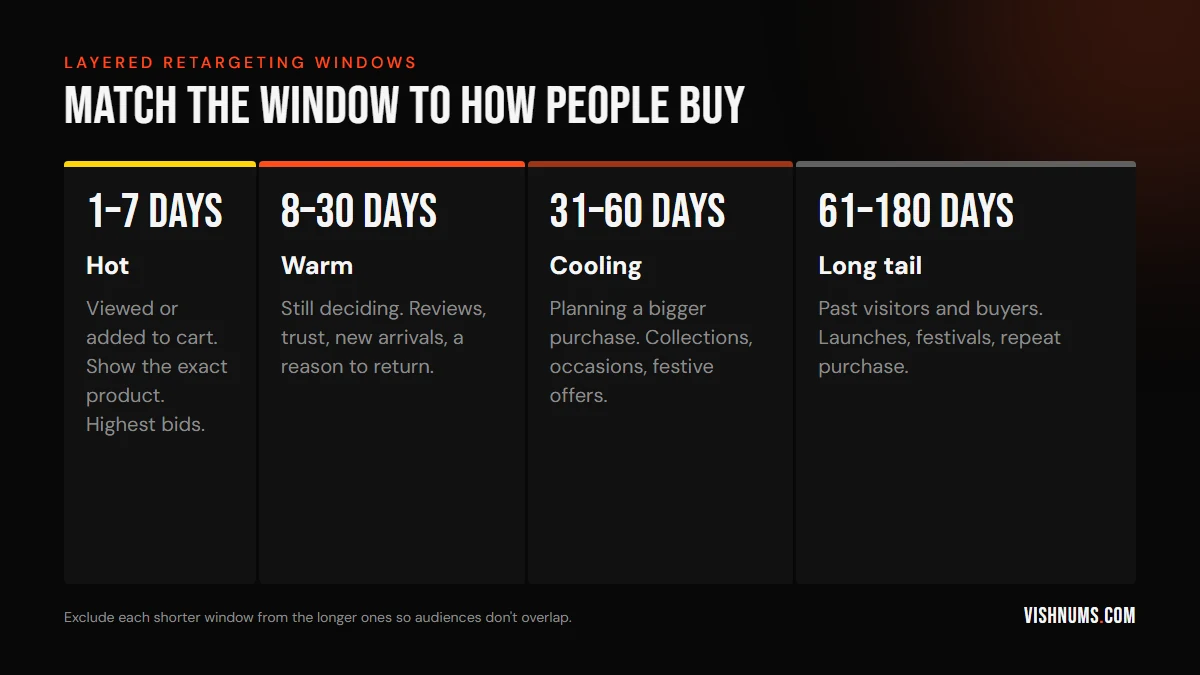
1 to 7 days: hot
People who viewed a product or added to cart recently. Show them the exact product with catalogue ads, and bid the most here. If you sell online, this is where catalogue retargeting fits.
8 to 30 days: warm
Still deciding. Give them reasons to trust you: reviews, certifications, your exchange or refund policy, behind-the-scenes video, and new arrivals similar to what they looked at.
31 to 60 days: cooling
They may be planning a bigger purchase or waiting for an occasion. Show collections, gifting ideas, and offers tied to upcoming festivals or seasons.
61 to 180 days: the long tail
Past visitors and past buyers. Lower budget, less frequent, but valuable for new launches, festive campaigns and repeat purchases. For many considered categories, a past buyer is your most likely next buyer.
Exclude each shorter window from the longer ones, so the 31 to 60-day ad set doesn't also reach someone who visited yesterday. That way each person sees the message that fits where they are.
What this looked like for a jewellery brand
For the Kerala D2C jewellery brand I manage, the funnel uses exactly this idea: catalogue retargeting at the bottom, and long-window engagement campaigns with 30, 60 and 180-day windows to re-engage past visitors and buyers across a longer consideration cycle.
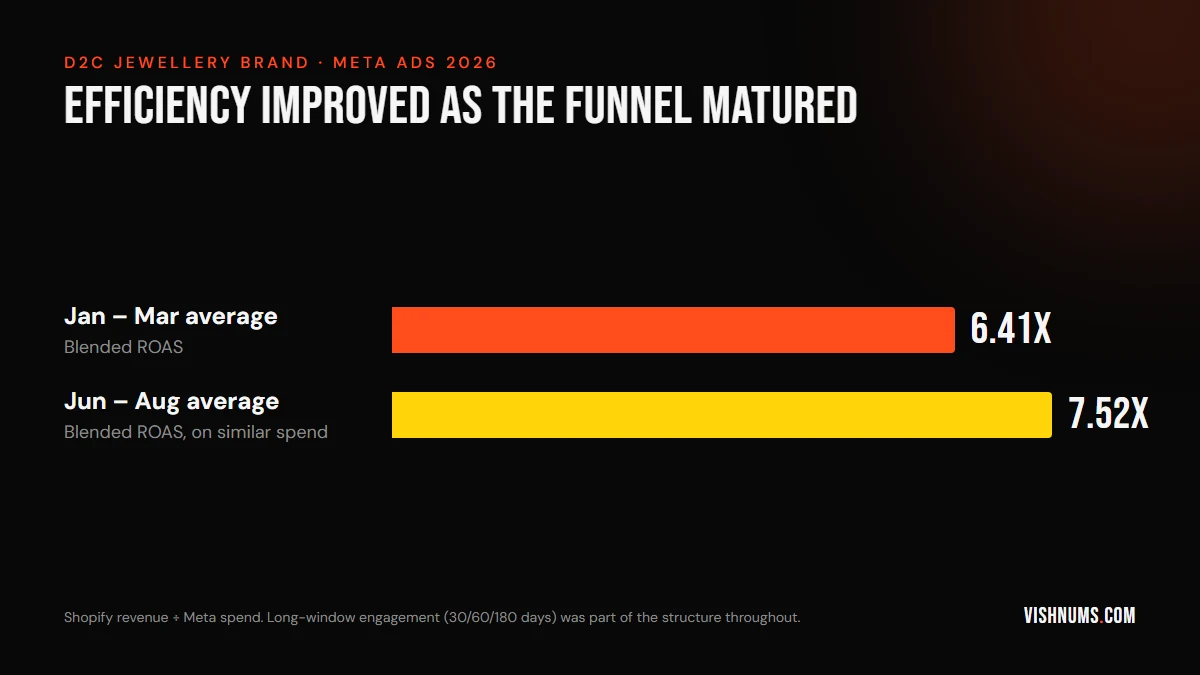
The account's efficiency improved as those audiences filled up: the June to August average ROAS was 7.52x, against 6.41x for January to March, on similar spend. Long windows weren't the only reason (creative and catalogue improvements helped too), but they're a big part of why prospecting spend kept paying back for months, not just days. Read the full case study.
How to set it up in Meta
- 01Create website custom audiences for each window: 7, 30, 60 and 180 days. Make separate ones for product viewers, add-to-carts and purchasers.
- 02Create engagement audiences for Instagram and Facebook: people who engaged with your profile or watched most of your videos, using the same windows.
- 03Build ad sets that exclude the shorter windows. The 8 to 30-day ad set targets the 30-day audience and excludes the 7-day audience, and so on.
- 04Exclude recent purchasers from product retargeting, unless you're cross-selling.
- 05Write different creative for each layer. The same "you left this in your cart" ad shouldn't run for 180 days.
Watch for these problems
- Small audiences. If you don't have much traffic, longer layers may be tiny. Combine layers until each has enough people to deliver.
- High frequency. A small audience with a big budget means people see your ad too often. Keep longer-window budgets modest. See how high is too high for frequency.
- Stale creative. Long windows mean people see you over months. Refresh creative regularly.
- Privacy limits. Browser tracking loses some visitors, especially on iPhones. Setting up the Conversions API helps keep audiences larger and more accurate.
How long should retargeting windows be for travel and lead businesses?
The same logic applies. For resorts and hotels, people often research a trip weeks before booking, so 30 and 60-day windows of website visitors and video viewers make sense, timed around long weekends and holidays. The Munnar resort I run ads for spends about a third of its core Meta funnel budget on retargeting engaged users with offers and property highlights. For lead businesses with a sales team, retarget people who submitted a lead but haven't booked with trust-building content, not another form.
Frequently asked questions
What is the best retargeting window for Meta Ads?
There isn't one. For impulse purchases, 7 to 30 days is usually enough. For high-ticket or considered purchases, layer windows of 7, 30, 60 and up to 180 days, with different messages for each.
What is the maximum retargeting window on Meta?
Website custom audiences can look back up to 180 days. Engagement audiences can go back further, up to 365 days for some sources.
Should I exclude purchasers from retargeting?
Exclude recent purchasers from ads for the product they just bought. Include past purchasers in separate cross-sell or new-collection campaigns, because they're often your best customers.
If you sell something people think about before buying, I can help set up a funnel that follows them the whole way. Get a quote.
Ads, a website that converts, or both: get a custom quote.