Meta Ads for Bridal Jewellery: Planning for the Wedding Season in Kerala and South India
Bridal jewellery is bought by families over months, not in one click. How jewellery brands can plan Meta ads around the wedding season, with creative that works, longer retargeting, store-visit offers and the metrics that matter.

Bridal jewellery isn't an impulse buy. A family might look for months before choosing a set. The bride saves designs on Instagram, her mother asks about weight and making charges, and the final decision is often made together in the store.
That's why Meta ads for bridal jewellery need a different plan from everyday jewellery. A single "Shop Now" campaign that expects a sale within a week misses most of the journey.
Wedding season is a planning season
Across India, jewellery brands spend more on advertising in the run-up to the wedding season. In Kerala and the rest of South India, wedding dates follow both the Hindu calendar and the Christian and Muslim calendars, so demand is spread across the year with some busy peaks. The best guide is your own data: when did enquiries and bridal orders peak last year?
Whatever your dates, the rule is the same: start advertising weeks before the peak, not during it. By the time the wedding month arrives, most families have already chosen their jeweller.
Map the journey before the campaign
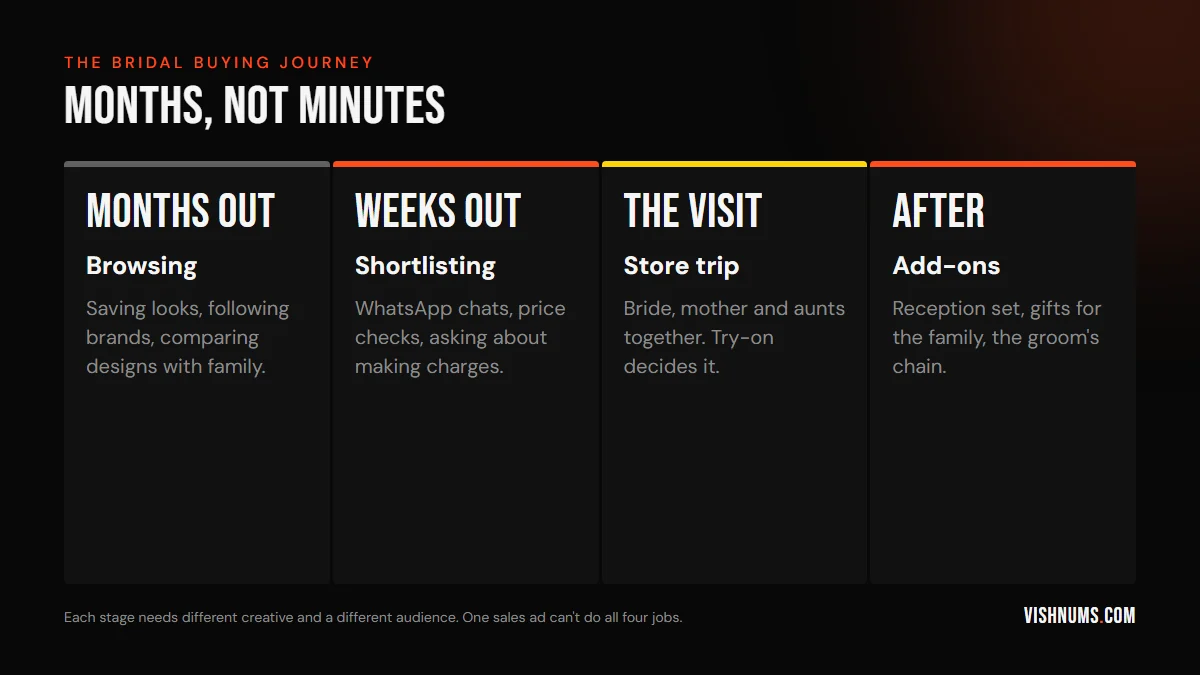
- 01Browsing (months out): the bride saves looks and follows brands. Use Reels and carousels that show full bridal looks, aimed at a broad audience.
- 02Shortlisting (weeks out): the family compares prices and designs. Retarget engaged viewers with weight, price and making-charge details. WhatsApp ads work well here.
- 03The store visit: most bridal sets are tried on before buying. Push appointment bookings and store-visit offers.
- 04Add-ons: after the main purchase, there are reception pieces, gifts and the groom's chain. Retarget recent buyers.
Creative that sells bridal jewellery
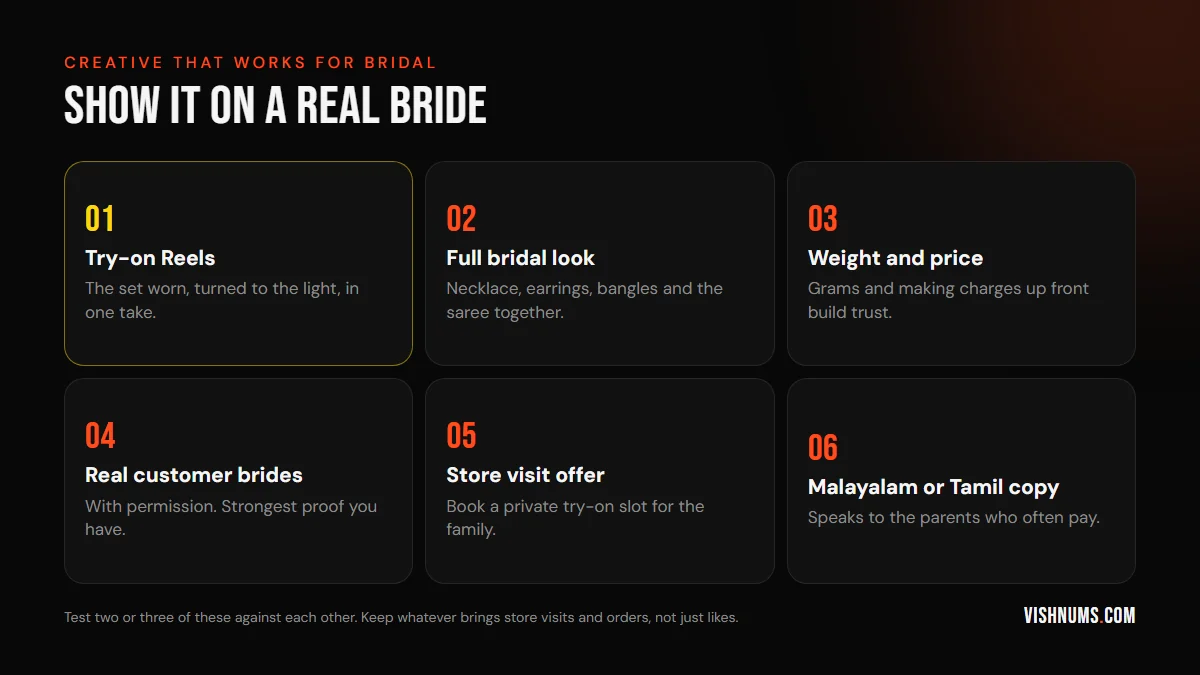
- Try-on Reels. A model or customer wearing the set, turning to catch the light. This is the format that consistently stops the scroll.
- The full look. Necklace, earrings, bangles and the saree together, the way a bride will actually wear them.
- Weight and price. With gold prices very high, families are nervous about the total. Showing grams and making charges up front builds trust and filters out people outside your range.
- Real customer brides, with permission. Nothing beats a real wedding photo with your set in it.
- Regional language. Malayalam or Tamil copy speaks directly to the parents, who often pay. More in my guide to regional-language ads.
Use longer retargeting windows
A 7-day retargeting window is too short for a purchase that takes weeks. For bridal, keep people who engaged in the last 60 to 180 days in your audiences, and change the message by stage. I explain how in Meta ads retargeting windows for high-ticket products.
Watch frequency as you do this. A family that sees the same necklace 20 times starts ignoring you. See what frequency is too high on Meta.
Count store visits and offline sales
Most bridal revenue happens in the store or after a WhatsApp conversation, not through the website checkout. If Meta only sees online purchases, it will think your bridal campaigns are failing. On the Google side, store-goal campaigns and offline sale uploads close the same gap: see driving showroom visits with Google Ads.
- Give every enquiry a source tag in your CRM.
- Record store visits and the value of bridal orders.
- Send those offline sales back to Meta through the Conversions API so it learns which people actually buy.
What the numbers looked like on a real account
On a D2C jewellery account I manage, the best single campaign reached a 12.51x ROAS, and the best month was May at 8.32x (₹5.28L spend, ₹43.95L revenue). Those numbers came from a full-funnel setup: broad prospecting with strong creative, longer retargeting, and offline sales fed back to Meta. The full breakdown is in the jewellery brand case study.
What ROAS you need depends on your margins. Gold jewellery margins are thin, so a ROAS that would be great for cosmetics can be a loss for a jeweller. Work out your own target with my break-even ROAS guide for Indian D2C brands, and see what a good ROAS is for jewellery brands.
A simple bridal campaign structure
- Prospecting: broad audience, women and men 24–55 in your delivery or store area (and the Gulf if you sell to NRIs), with try-on Reels and full-look creative.
- Retargeting: engaged viewers and site visitors from the last 60–180 days, with price, weight and store-visit offers.
- Catalogue ads for everyday pieces and add-ons, if you sell online. See my guide to dynamic catalogue ads for Shopify stores.
Frequently asked questions
When should jewellery brands start wedding season ads?
Several weeks before your peak wedding months. Families shortlist jewellers well before the wedding, so ads that start during the busy month arrive too late.
Do Meta ads work for bridal jewellery?
Yes, when you measure the right things. Most bridal sales happen in store or over WhatsApp, so track store visits and offline sales, not just website purchases.
What ROAS is good for bridal jewellery ads?
It depends on your margin. Calculate your break-even ROAS first. Bridal orders are large, so even a modest ROAS can be profitable if your margins allow it.
Want your bridal campaigns built around store visits and real sales? Request a quote.
Ads, a website that converts, or both: get a custom quote.