Meta Ads for Skin and Hair Clinics in Kerala: Get Consultations Without Breaking Ad Policy
How skin, hair and laser clinics in Kerala can run Meta ads that get approved and fill consultations: policy-safe copy, treatment-wise campaigns, doctor-led creatives and a reception script.
Skin and hair clinics are everywhere in Kerala now. Kochi, Thiruvananthapuram, Kozhikode and Thrissur each have dozens of dermatology practices, cosmetology centres, laser clinics and hair transplant specialists, and smaller towns are catching up quickly. Demand is strong: people want help with acne, pigmentation, hair fall, laser hair reduction and pre-wedding skin care, and they research on Instagram before they book.
Meta ads for this category come with two problems. First, Meta's health and appearance policies are strict, and clinic ads get rejected more often than almost any other local business. Second, many leads ask the price, hear "Come for a consultation" and disappear.
This guide shows how to deal with both. It covers the policies in plain language, copy that gets approved, how to structure campaigns by treatment, creatives that build trust, the reception process that turns chats into appointments, and how to measure what matters.
In brief
- Describe your services and doctors, never the viewer's skin, hair or body.
- Target 18 and over for cosmetic procedures, and avoid shame-based before-and-after images.
- Run separate campaigns for separate treatments; the buyers and prices differ.
- Put your doctors on camera explaining treatments in Malayalam.
- Publish consultation fees and honest price ranges; train reception to offer specific slots.
- Measure consultations attended and treatment courses started, not just messages.
The policy trap: personal attributes
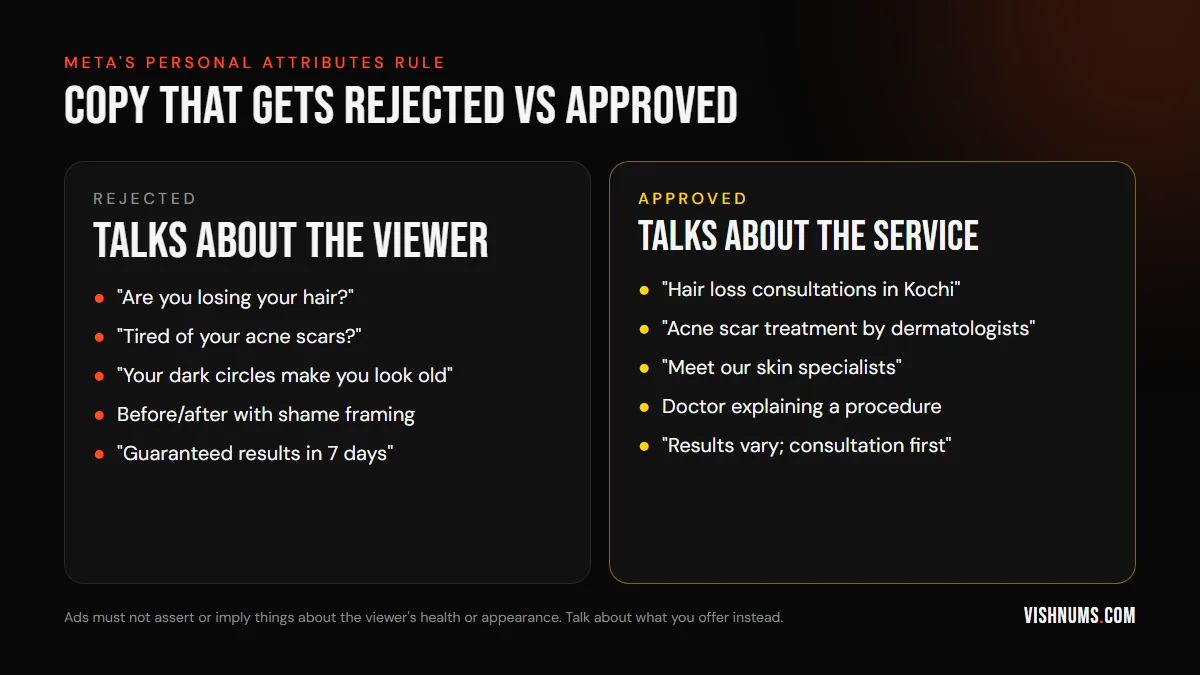
Meta's rules forbid ads that suggest they know something personal about the person scrolling, and health and looks are two of the protected areas. This is the most common reason clinic ads are rejected.
Phrases that usually get rejected:
- "Are you losing your hair?"
- "Tired of acne scars ruining your confidence?"
- "Your pigmentation is making you look older."
- "Struggling with hair fall after delivery?"
The fix is simple once you see the pattern: talk about what the clinic offers, not about the person seeing the ad.
- "Hair loss consultations with dermatologists in Kochi."
- "Acne scar treatments: what to expect at your first visit."
- "Pigmentation treatment options explained by Dr [Name]."
- "Post-pregnancy hair fall: when to see a dermatologist."
The last example works because it is general information, not a claim about the viewer.
Other rules clinics need to know
Meta revises its Health and Wellness rules periodically; read the latest version in its Transparency Center before any large campaign. As a working guide:
- Cosmetic procedures such as laser treatments, fillers and similar services must target people 18 and over.
- Before-and-after images are sensitive. Meta rejects imagery that makes people feel bad about their bodies or exaggerates what a treatment achieves. Many clinics are safer using doctor-led videos, treatment explainers and patient testimonials (with consent) instead.
- No miracle claims. "Permanent cure", "guaranteed results" and "100% hair regrowth" invite rejection, complaints and, in some cases, legal trouble.
- Prescription drugs can't be promoted freely. Talk about consultations and procedures, not specific prescription medicines.
Repeated rejections can lead to an ad account restriction, which takes time to fix. If it happens, follow the steps in how to appeal a disabled Meta ad account. Better still, set up a second admin on the Business Portfolio and keep your account clean from the start.
Doctors also have professional conduct rules on self-promotion under Indian medical regulations. Let the clinic advertise its services, keep claims factual, and check with your doctors before featuring them.
Structure campaigns by treatment
"Complete skin and hair care" ads attract everyone and convert no one. Patients search and decide by treatment, and each treatment has a different buyer, price and decision time.
Acne and acne scars
Mostly people in their late teens to early 30s. Target 18+, and use explainers on the difference between active acne treatment and scar treatment, how many sessions are typical, and aftercare.
Pigmentation and melasma
Often women in their late 20s to 40s, many of whom have tried home remedies. Content that explains why some pigmentation takes months, and why sun protection matters in Kerala's climate, builds trust.
Hair loss treatments
PRP and GFC-type treatments, medical management and hair transplant consultations. The audience skews to men in their late 20s to 40s for transplants, and women for medical hair fall treatment. Many NRIs plan hair transplants during trips home. A separate Gulf campaign can reach them; see how to target NRIs in the Gulf.
Laser hair reduction
Younger, price-sensitive, and comparing packages. Clear session prices and package deals work better than "consult for price."
Bridal skin packages
Brides planning three to six months ahead. Time these campaigns before the wedding seasons and collaborate with bridal makeup artists. Our guide to Meta ads for salons and bridal makeup artists in Kochi covers the bride's decision path.
Start with the two or three treatments that bring the most revenue or have the most free capacity, and give each its own campaign and budget.
Creatives that build trust
Patients choose a clinic on trust in the doctor and comfort with the setting. Your creatives should show both.
The doctor on camera
A 45-to-90-second video of your dermatologist explaining a treatment in plain Malayalam: who it suits, how many sessions, what it feels like, how long results take. This is the single most effective format for clinics, because expertise is what people are buying.
First-visit walkthrough
Film what happens at a first consultation: reception, the skin analysis, the doctor's discussion, how the treatment plan and pricing are explained. Many people delay visiting because they don't know what to expect.
Myth-busting
Short Reels answering common questions: "Does laser hair reduction work on dark skin?", "Do hair oils stop hair fall?", "Is PRP painful?". These get saved and shared, and they position your doctors as trustworthy.
The clinic itself
Clean treatment rooms, equipment, sterilisation, the waiting area. Hygiene is a real concern, especially for procedures.
Patient stories
Testimonials in the patient's own words, with written consent, focused on their experience with the clinic rather than dramatic transformations. Pull good Google reviews into ads too, with permission.
Fix the booking flow before you scale
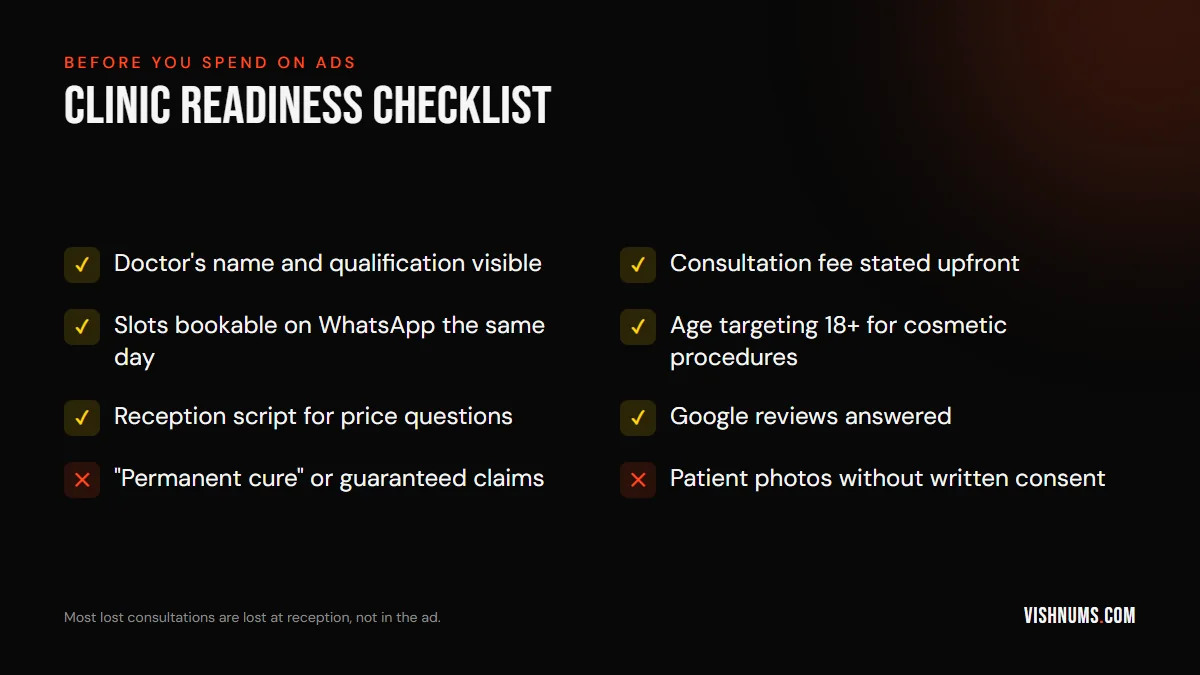
Most clinic leads ask one question first: "How much?" If reception answers "Please come for a consultation, doctor will tell you", a large share of people never reply again. They aren't being difficult; they don't want to spend time and a consultation fee only to find the treatment is far outside their budget.
Fix this with a few simple rules:
- Publish your consultation fee in ads, on WhatsApp and on your website.
- Give honest price ranges for common treatments: "Laser hair reduction for the underarms is usually ₹X to ₹Y per session, depending on the machine and number of sessions. The doctor will confirm after checking your skin."
- Offer specific slots: "Would tomorrow at 11 am or Saturday at 4 pm suit you?"
- Reply within minutes during clinic hours, and set an auto-reply with the fee and booking link outside them.
Click-to-WhatsApp ads usually work better than lead forms for clinics because of this back-and-forth. The trade-offs are explained in Click-to-WhatsApp vs lead form ads.
A reception script you can use
Train whoever handles WhatsApp and calls to follow a simple flow. Here is a version you can adapt:
- 01Greet and ask what they're interested in: "Hello, thanks for messaging [Clinic]. Which treatment would you like to know about?"
- 02Answer the price question honestly: consultation fee, plus a range for the treatment.
- 03Explain the first visit: "At the consultation, Dr [Name] will check your skin and explain the options and the total cost before anything is done."
- 04Offer two slots: "We have tomorrow at 11 am or Thursday at 5 pm. Which suits you?"
- 05Confirm and remind: send the confirmation with the address and map link, then a reminder the evening before.
Measure how many chats become booked consultations each week. If the rate is low, listen to real conversations before changing the ads; the problem is usually here.
Consultations are only the start
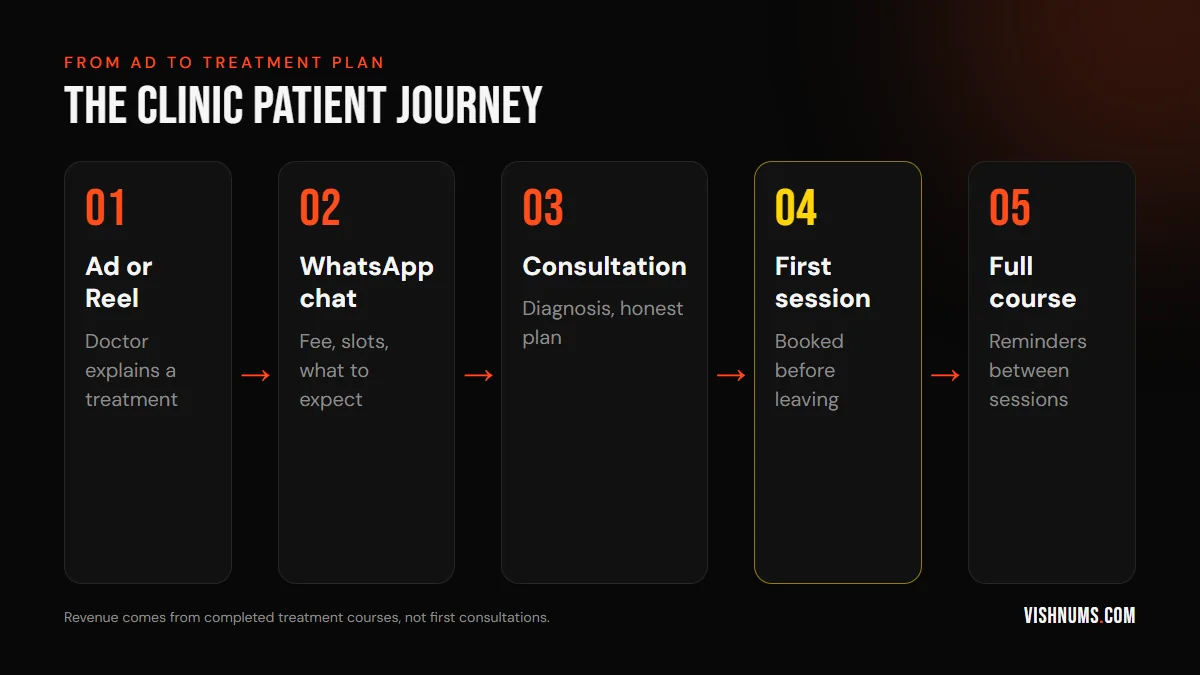
Most skin and hair treatments need multiple sessions. A clinic that books many first consultations but few complete treatment courses is working hard for little revenue.
- Book the first session before the patient leaves, when the doctor's advice is fresh.
- Explain the full plan in writing: number of sessions, spacing, total cost, aftercare.
- Send reminders before each session on WhatsApp.
- Follow up after missed sessions within a day.
- Offer packages for multi-session treatments, paid upfront or in instalments.
This is also where your advertising data becomes useful. If one campaign brings consultations that rarely continue to treatment, it may be attracting the wrong people, even if its cost per message looks cheap.
Measuring results properly
Track these numbers by campaign and, where possible, by ad:
- Messages or leads received
- Consultations booked
- Consultations attended
- Treatment courses started
- Revenue from those courses
Most clinics only see messages in Ads Manager and attended patients in the clinic software, with no connection between them. A simple fix: ask every new patient how they heard about the clinic, and tag WhatsApp chats with the ad they came from. Tracking WhatsApp leads from Facebook ads explains a practical method.
Be careful with what you send back to Meta. Send business events like "consultation booked", never diagnoses, treatments tied to conditions, or anything that reveals a patient's health details.
Running the numbers for one treatment
The figures below are made up to show the maths; your own costs and conversion rates will differ.
Say a clinic spends ₹25,000 a month on a laser hair reduction campaign and gets 200 WhatsApp conversations. Reception books 50 consultations, 38 attend, and 20 start a package. If an average package is worth ₹15,000, that campaign brings ₹3 lakh of treatment revenue for ₹25,000 of ads.
Now imagine reception improves its price answers and books 70 consultations from the same 200 chats. With the same attendance and conversion rates, the packages rise to about 28, worth around ₹4.2 lakh, without spending a rupee more on ads. That's why fixing the booking flow often beats raising the budget.
Set up your Instagram profile to convert
Before messaging a clinic, most people open its Instagram profile to size it up. The profile has a few seconds to reassure them:
- Bio: clinic name, the town, the main treatments, and a clear line like "Consultation ₹[X] · Book on WhatsApp".
- Highlights: one for each main treatment, one for doctors, one for the clinic tour, one for patient reviews, one for prices and FAQs.
- Pinned posts: your best doctor video, a clinic walkthrough, and a patient story.
- Contact buttons: WhatsApp, call and directions all working.
Check your own profile from a phone, as a stranger would see it. If it's mostly offers and festival greetings, people will doubt the medical side of your clinic.
Retargeting: patients take time
Skin and hair decisions are rarely made in a day. Someone watches a laser hair reduction video in January and books in March before a wedding. Retargeting keeps you in front of them while they decide:
- Video viewers: viewers who stayed for most of a doctor video during the last two to three months.
- Profile engagers: people who visited or interacted with your Instagram profile.
- Website visitors to treatment pages, if your site has the pixel installed (keep tracking neutral, as above).
- People who messaged but didn't book: you can reach them through your own follow-up on WhatsApp rather than ads.
Show retargeting audiences different creatives from the first ads: patient stories, a clinic tour, answers to common objections like pain or downtime, and a reminder of the consultation fee. Keep frequency in check; seeing the same clinic ad ten times a week feels intrusive. Meta ads frequency: what is too high explains how to watch it.
Plan around the year
Demand for skin and hair treatments shifts through the year in Kerala:
- Before wedding seasons, bridal skin packages and laser hair reduction rise as brides and families plan.
- Summer brings questions about tanning, pigmentation and sweat-related skin issues.
- The monsoon brings fungal infections and hair fall questions, which suit educational content.
- Gulf school holidays and festivals bring NRIs home with a short window for procedures like hair transplants. Advertise to them a few weeks before they travel, so they can book slots in advance.
Plan treatment campaigns two to four weeks ahead of these peaks, and use quieter months to build up your content library.
Handling negative reviews
Clinics attract strong reactions because results vary and expectations can be high. A few angry reviews are normal; how you reply matters more than the reviews themselves, because future patients read both.
- Reply calmly and quickly, without arguing in public.
- Don't reveal health details, even if the patient has. Confidentiality comes first.
- Invite them to talk privately: "We're sorry to hear this. Please call our clinic manager on [number] so we can look into it properly."
- Fix the cause if there's a pattern, such as long waiting times or unclear pricing.
Unrealistic expectations cause many complaints. Clear, honest ads and consultations reduce them more than any review strategy.
What a treatment page should include
If your ads send people to your website instead of WhatsApp, each treatment needs its own page, not a generic services list. A good treatment page answers the questions patients ask at reception:
- What the treatment is, in simple language.
- Who it's suitable for, and who should avoid it.
- How many sessions are usually needed, and how far apart.
- What it feels like, and what downtime to expect.
- Aftercare instructions.
- Price range and consultation fee.
- The doctor who performs it, with qualifications.
- A booking button and a WhatsApp button.
These pages also help you rank on Google for searches like "laser hair reduction in Kozhikode", which brings patients without paying for every click.
Google matters too
Many people see your Instagram ad, then search your clinic on Google before booking. Make sure they find:
- A Google Business Profile with the correct category, photos of the clinic, doctors' names and replies to every review.
- A website page for each main treatment, with the doctor's explanation, process, aftercare and FAQs.
- Consistent prices and information across Instagram, Google and WhatsApp.
If your clinic also does dental or general treatments, the principles in Meta ads for dental clinics in Kerala apply as well.
Don't ignore referrals and repeat patients
Ads bring new patients, but a clinic's steadiest growth usually comes from people who already trust it. Build simple habits around that:
- Ask satisfied patients for a Google review at the end of a successful course, when they're happiest with the result.
- Stay in touch with past patients through occasional WhatsApp updates on new treatments or seasonal skin care tips, with their consent and an easy way to opt out.
- Build relationships with general practitioners, gynaecologists and salons in your area who see people with skin and hair concerns and may refer them.
- Offer maintenance plans for treatments that need occasional top-up sessions.
A patient who returns or refers a friend costs nothing in ads, which lets you spend more on reaching new people.
Pitfalls clinics fall into
- Copy that talks about the viewer's problem, which gets ads rejected.
- Dramatic before-and-after images that break policy or set unrealistic expectations.
- Hiding prices, then losing most chats at the first question.
- One generic campaign for every treatment.
- Slow WhatsApp replies, especially in the evening when most people message.
- Not booking the next session before the patient leaves.
- Judging campaigns on cost per message instead of treatment revenue.
Your first three months
Weeks 1–4: fix the basics (published fees, reception script, fast replies), then launch campaigns for your two most important treatments with doctor-led videos. Track chats, bookings and attendance.
Weeks 5–8: add myth-busting Reels and patient stories, test a third treatment campaign, and set up session reminders. Review which campaigns bring patients who continue treatment.
Weeks 9–12: shift budget to campaigns with the best treatment revenue, test a Gulf campaign for hair transplants or bridal packages if relevant, and start sending "consultation booked" events back to Meta.
Sources and further reading
Meta's health advertising rules are updated periodically; the current text lives here:
- Meta Transparency Center: Health and Wellness ad standards
- Meta Transparency Center: Advertising Standards overview
Frequently asked questions
Why does Meta reject my skin clinic ads?
Most often because the copy refers to the viewer's appearance or health ("Do you have acne?"), uses before-and-after images that suggest negative self-image, or makes guaranteed claims. Describe your services and doctors instead.
Can I target under-18s for acne treatment ads?
Ads for cosmetic procedures must target 18 and over. For medical dermatology, keep targeting adult and let parents book for their teenagers.
Are lead forms or WhatsApp better for clinics?
WhatsApp usually, because people want quick answers about prices and slots. Lead forms can work for higher-value treatments if your team calls quickly.
Should clinics show prices in ads?
Showing the consultation fee and honest price ranges usually improves bookings. Hidden prices lose many people at the first question.
Can I use before-and-after photos in Instagram ads?
Be very careful. Meta restricts images that promote negative self-image or show unrealistic results, and you need written patient consent. Doctor explainers and testimonials are safer and often perform as well.
Running a skin or hair clinic and want consultations that turn into treatments? Request a quote.
Ads, a website that converts, or both: get a custom quote.