Meta Ads for Study Abroad Consultants in Kerala: Students, Parents and Intakes
How Kerala study abroad and overseas education consultants can use Meta ads to reach students and parents, plan around UK, Canada, Australia and Germany intakes, and turn enquiries into counselling sessions.
Kerala sends a large share of India's overseas students to the UK, Canada, Australia, Ireland, Germany and New Zealand. That makes study abroad one of the most crowded ad categories in the state. Every consultancy in Kochi, Kottayam, Thrissur and Kozhikode runs "Study in UK" ads at the same time.
Cheap leads aren't the hard part. The hard part is turning them into counselling sessions, applications and visas. Here's how I would set up Meta ads for a study abroad or overseas education consultancy in Kerala.
Start from the intake calendar
Students don't decide in a week. Someone flying in September usually starts thinking about it nine to twelve months earlier.
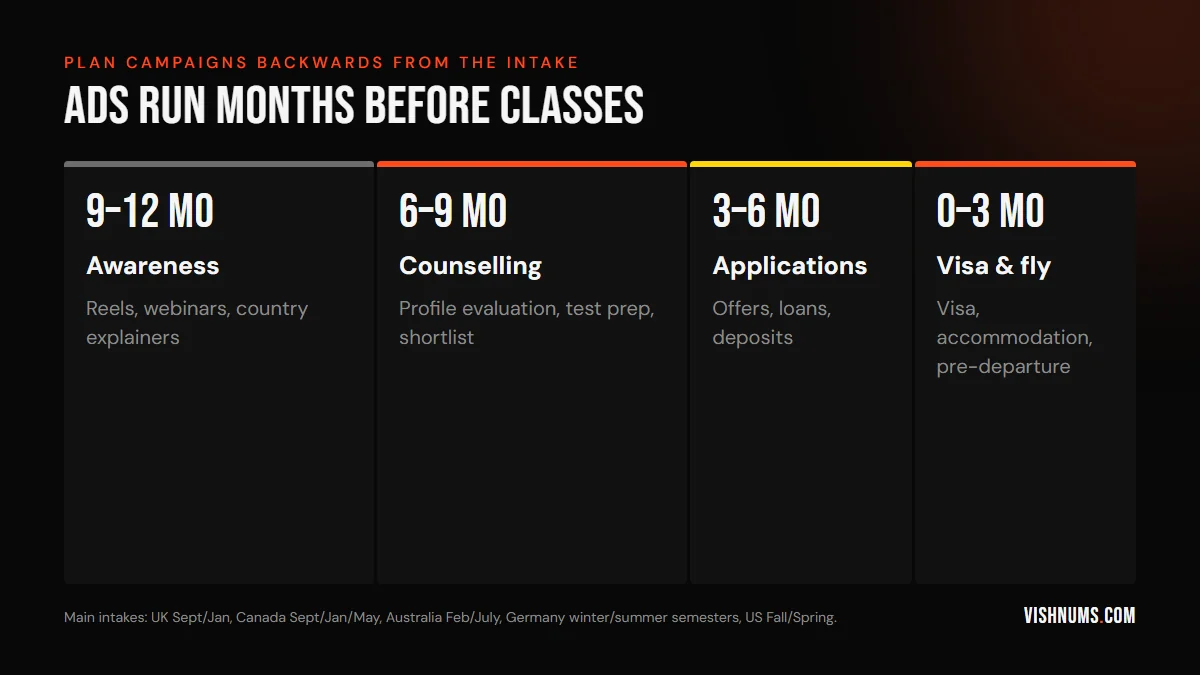
Run a different message at each stage:
- Awareness (9–12 months out): country comparisons, cost explainers, alumni stories, free webinars.
- Counselling (6–9 months out): free profile evaluation, IELTS/PTE or German language batches, spot assessment events.
- Applications (3–6 months out): last-date reminders, scholarship deadlines, education loan help.
- Visa (0–3 months out): visa file support, accommodation, pre-departure sessions. These mostly go to people already in your CRM.
Speak to the student and the parent
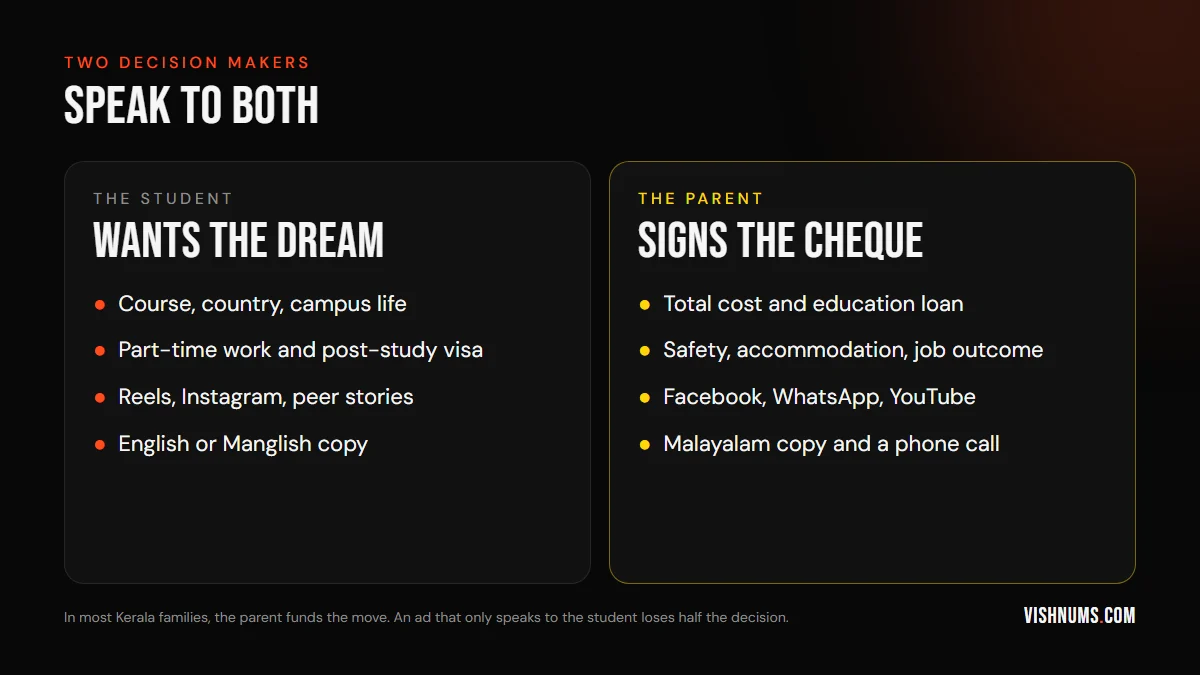
Run separate ad sets, or at least separate creatives, for students and parents. Student creatives sell the outcome: the course, the city, the post-study work route. Parent creatives answer cost, safety and return on investment, ideally in Malayalam. A short video of a counsellor explaining the real total cost of a UK master's degree in plain Malayalam often beats a glossy campus shot. See regional-language ads for handling the language mix.
Targeting that works in this category
- Location: Kerala, plus the Gulf for NRI families planning their child's education. That angle is covered in targeting NRIs in the Gulf.
- Broad audiences with strong creative usually beat stacked interests like "IELTS" and university names. Let the copy qualify people.
- Age: roughly 18–28 for students and 40–60 for parents, as separate ad sets when the messages differ.
- Retargeting of video viewers and site visitors over a long window, because the decision takes months. Window lengths are explained in retargeting windows for high-ticket products.
Education is not one of Meta's special ad categories, so age and location targeting stay available. Still read Meta's policies before making claims about visas or admissions.
Lead forms or WhatsApp?
Instant forms bring volume, but many study abroad leads are students who tapped submit without meaning it. Two things help:
- Add qualifying questions: highest qualification, year of passing, preferred country, preferred intake, English test status.
- Or open a WhatsApp chat, where a counsellor can qualify someone in minutes.
The trade-off is laid out in click-to-WhatsApp vs lead form ads. Most consultancies do well with a mix: forms for webinars and events, WhatsApp for direct counselling.
Offers that bring serious enquiries
- Free profile evaluation with a named counsellor.
- Country-specific seminars in your branch city, with a date and venue.
- A university-delegate or spot admission day.
- A cost calculator or downloadable country guide.
Avoid "100% visa guarantee" claims. They attract the wrong people, can get ads rejected, and no consultant controls an embassy's decision.
Measure what matters
Track the funnel, not just cost per lead: leads → counselling sessions → applications → offers → deposits → visas. If you can't see which campaign produced the students who actually flew, you'll keep paying for the cheapest leads instead of the best ones. Sending CRM stages back to Meta lets the algorithm learn from counselling sessions and applications instead of raw form fills.
Follow-up is half the job
A student enquiring at 11 pm is comparing three consultancies. Whoever calls first, explains clearly and books a session usually wins. Use WhatsApp templates for instant replies, route leads to counsellors by country, and stay in touch through the months-long decision. If leads arrive but nobody enrols, start with why Facebook leads don't turn into sales.
Frequently asked questions
When should study abroad consultants run Meta ads?
All year, with the message changing by stage: awareness 9–12 months before each intake, counselling and test prep 6–9 months out, application deadlines 3–6 months out.
Should study abroad ads target students or parents?
Both. Students respond to course and lifestyle; parents respond to cost, loans, safety and outcomes. Use separate creatives, and Malayalam for parents.
Is education a special ad category on Meta?
No. Overseas job and recruitment ads are a different matter; see Meta special ad categories in India.
Running a study abroad consultancy and want better students, not just more leads? Request a quote.
Ads, a website that converts, or both: get a custom quote.